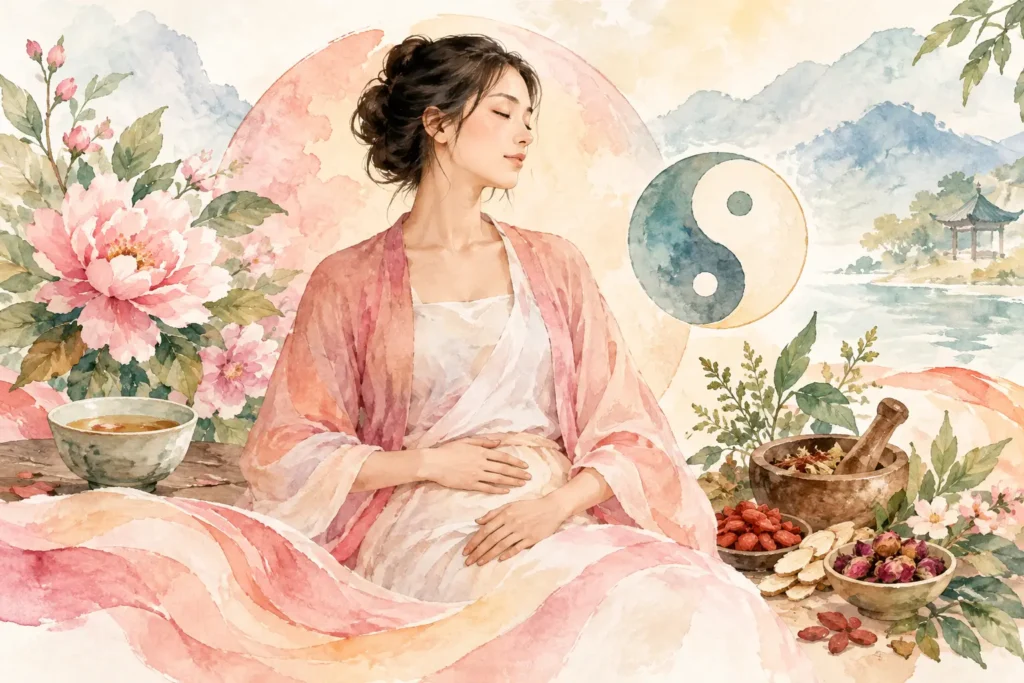
A period is not simply a monthly event to endure. Its timing, flow, color, pain level, and emotional texture can offer meaningful information about how supported your whole system feels. TCM for menstrual health invites a different relationship with your cycle: one rooted in listening, gentle curiosity, and the understanding that your body is always communicating.
For many women, menstrual symptoms have become so normalized that they are dismissed as the price of having a cycle. Yet severe pain, very heavy bleeding, missing periods, or an abrupt change in your usual pattern deserve attention and compassionate care. Traditional Chinese Medicine, or TCM, can be a nourishing part of a whole-person path, especially when it is paired with appropriate medical evaluation and personalized support.
What TCM for Menstrual Health Looks At
In Traditional Chinese Medicine, menstrual health is not viewed as an isolated reproductive concern. The cycle is connected to the movement of Qi, the nourishment of Blood, the balance of Yin and Yang, and the health of organ systems such as the Liver, Spleen, and Kidneys. These names describe functional patterns within TCM and are not the same as Western medical diagnoses or individual organs alone.
A TCM practitioner may ask about the length and regularity of your cycle, whether you experience clotting or cramping, your sleep, digestion, energy, stress levels, fertility history, and the emotions that tend to rise before or during bleeding. They may also look at the tongue and feel the pulse. This wide lens can feel deeply validating for someone who has spent years being told that test results are normal while still feeling that something is not right.
The goal is not to force every body into a textbook 28-day cycle. It is to understand your unique pattern and support greater harmony over time. For one person, that may mean helping the body recover after chronic stress and undernourishment. For another, it may mean creating more room for rest, processing held grief, or addressing a pattern of tension and stagnation that shows up as painful periods.
The Patterns TCM May Consider
TCM uses pattern language to describe the ways symptoms gather together. A qualified practitioner does not diagnose from a single symptom. The whole story matters, including your medical history, current medications, life stage, and goals.
Qi stagnation and the held pressure of stress
When life has required you to push through, suppress feelings, over-function, or remain in a state of vigilance, TCM may describe a pattern of Qi stagnation. Premenstrual breast tenderness, irritability, mood shifts, bloating, and cramps that feel sharp or tense are sometimes considered through this lens.
This is not a suggestion that symptoms are all in your head. Stress is embodied. Your nervous system, sleep, appetite, muscular tension, and hormonal rhythms influence one another. Support may include acupuncture from a licensed provider, acupressure, gentle movement, breathwork, Qi Gong, emotional processing, and practical boundaries that reduce the constant demand to hold everything together.
Blood deficiency and depleted reserves
Fatigue, dizziness, pale complexion, dry skin, scanty bleeding, and feeling depleted after menstruation may lead a TCM practitioner to explore Blood deficiency. In everyday language, this can be an invitation to consider whether your body is receiving enough nourishment, rest, and recovery.
However, symptoms such as fatigue and heavy or irregular bleeding can also be linked to iron deficiency, thyroid conditions, pregnancy, and other medical concerns. Lab work and medical care are not separate from holistic healing. They can offer essential clarity. TCM-informed food guidance may emphasize warm, nourishing meals and consistent eating, but it should complement, not replace, treatment recommended by your medical team.
Blood stasis and painful flow
Pain that feels fixed, stabbing, or severe, especially with dark blood or clots, may be considered a sign of Blood stasis in TCM. The language points toward circulation and movement, while also recognizing that pain can have many causes.
Endometriosis, fibroids, adenomyosis, pelvic inflammatory disease, and ovarian cysts require medical assessment. A holistic approach can support comfort, emotional resilience, and a deeper sense of partnership with your body, but it must never minimize pain or delay needed diagnosis. You deserve care that takes your symptoms seriously.
Cold, heat, and the body’s changing signals
Some people notice that heat pads bring immediate relief, that cold foods worsen cramps, or that their symptoms shift with seasons and stress. In TCM, warmth and cold are meaningful qualities. A practitioner may explore whether cold is contributing to constriction and pain, or whether signs of heat, such as irritability, thirst, acne, or very heavy bright-red bleeding, are part of the picture.
These patterns are individualized. Following a generic online protocol or taking herbs because they worked for a friend can be counterproductive. What supports one person may aggravate another pattern, interact with medication, or be unsuitable during pregnancy or while trying to conceive.
Gentle Practices That Honor Your Cycle
You do not have to transform your entire life to begin building a more attuned relationship with your menstrual health. Small, repeatable moments of care can become a form of self-trust.
Start by tracking your cycle for at least three months. Note the first day of bleeding, flow changes, cramps, sleep, digestion, mood, energy, cervical fluid, and anything that reliably helps or worsens symptoms. This record can reveal patterns that are easy to miss when each month feels like a new emergency. It can also make conversations with medical and holistic providers more productive.
During the days before your period, many people benefit from easing intensity where possible. This may look like choosing a quieter evening over another obligation, eating regular meals, taking a warm bath, reducing high-impact exercise if it increases pain, or letting emotions move through journaling, tears, voice, or supportive conversation. Rest is not weakness. It is a form of physiological and energetic repair.
Gentle movement can help some bodies feel less congested and more grounded. Walking, stretching, restorative yoga, and Qi Gong are often more supportive during menstruation than forcing yourself through a punishing workout. The right choice depends on your symptoms. If movement increases pain, dizziness, or heavy bleeding, pause and seek guidance.
Food can also be part of your ritual of care, without becoming another set of rigid rules. Warm soups, cooked vegetables, protein, whole grains, iron-rich foods, and adequate hydration may feel stabilizing. If you have dietary restrictions, a history of disordered eating, digestive conditions, or concerns about anemia, individualized nutritional guidance is far wiser than restriction.
Where Herbs and Acupuncture Fit
Chinese herbal medicine and acupuncture are two well-known TCM modalities, but neither is a one-size-fits-all solution. Acupuncture should be provided by a properly trained, licensed professional according to the requirements in your state. Chinese herbs should be prescribed by a qualified practitioner who understands your full health picture.
Herbs can interact with medications, including blood thinners, fertility medications, hormonal contraception, antidepressants, and drugs for chronic conditions. They may also be inappropriate in pregnancy, breastfeeding, or before surgery. Tell every provider involved in your care what you are taking, including teas, tinctures, supplements, and over-the-counter remedies.
Research on acupuncture and herbs for menstrual concerns is still evolving. Some people report meaningful relief, while others experience modest change or need a different approach. The most honest measure of success is not a promise of a cure. It is whether your care is helping you feel safer in your body, better informed, and more supported in addressing the roots and realities of your symptoms.
Menstrual Health Includes the Emotional Body
Cycles can bring old emotions to the surface. The days before bleeding may reveal resentment that has gone unspoken, grief that has not been witnessed, or exhaustion that your usual pace allows you to ignore. This does not mean menstruation creates the wound. It may simply lower the volume of the coping strategies that usually keep it hidden.
A heart-centered healing process makes room for this information without making your emotions a problem to solve. Trauma, relationship dynamics, ancestral stories, body image, fertility loss, and the pressure to be endlessly productive can all shape the way you experience your cycle. When these layers are met with care, the body may begin to feel less like an adversary and more like an ally.
At Love Evolution, this kind of whole-person listening can include emotional healing, energetic support, nervous system awareness, and practical integration alongside TCM-informed wisdom. The intention is not to override the body’s message. It is to help you hear it with greater compassion and respond in ways that honor your needs.
When to Seek Medical Care Promptly
Holistic support is most powerful when it works alongside medical care, not in place of it. Seek prompt evaluation for severe or suddenly worsening pelvic pain, bleeding that soaks through a pad or tampon every hour for more than two hours, fainting, fever, possible pregnancy with pain or bleeding, bleeding after menopause, or thoughts of harming yourself.
Make an appointment with a medical professional for periods that become consistently much heavier, more painful, irregular, or absent; bleeding between periods; pain during sex; symptoms of anemia; or difficulty conceiving. You do not need to wait until symptoms become unbearable to ask for answers. If you feel dismissed, it is okay to seek another clinician who listens carefully.
Your cycle is not asking you to become perfect. It may be asking for a slower pace, clearer support, deeper nourishment, or the courage to take a symptom seriously. Let that invitation guide you back to your heart, one compassionate choice at a time.